Photo credit: Toronto Metropolitan University
An exciting transformation is underway in Brampton and the surrounding areas – one that is reimagining medical education and strengthening the local health care system for many years to come. William Osler Health System (Osler), one of Ontario’s largest and most diverse community hospital systems, has now officially welcomed the first cohort of postgraduate medical learners from the new Toronto Metropolitan University (TMU) School of Medicine. These new student doctors will join others from additional academic institutions.
This partnership builds on Osler’s long-standing leadership in medical education. For more than 15 years, Osler physicians have trained family medicine residents from McMaster University and the University of Toronto. Now, as TMU’s primary clinical partner, Osler is expanding opportunities for learners and advancing a vision for community-based medical education that could serve as a model for the province.
With this milestone, Osler is deepening its evolution from a community hospital into a dynamic community teaching hospital, where future health professionals are trained in the very communities they may one day serve.
“By training physicians where they’re needed most, TMU and Osler are working together to build a stronger, more resilient local health system – one that grows its local expertise,” said Dr. Hemant Shah, Vice President, Academics, William Osler Health System.
 “This partnership is an exciting and timely response to the need for sustainable physician recruitment and retention across our region and beyond.”
Osler’s commitment to health education extends beyond physician training through its growing Academic Practice Partnership (APP) Model with institutions like Humber Polytechnic, TMU, and the University of Toronto. Focused on practice, education, and research, the APP Model supports the training of nursing and allied health students, builds research capacity, and integrates evidence-based care – strengthening the health workforce pipeline for today and the future.
Located in Brampton, the TMU School of Medicine is the first new medical school in the Greater Toronto Area (GTA) in over 180 years. Designed around principles of community inclusion, social accountability and innovation, the TMU School of Medicine aligns closely with Osler’s commitment to addressing the unique health needs of the 1.3 million residents it serves across Brampton, Etobicoke and surrounding areas – incredibly, 76 per cent of whom identify as visible minorities, and over half as immigrants.
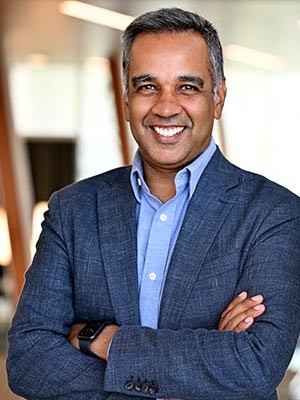
Photo caption: Dr. Hemant Shah, Vice President, Academics, William Osler Health System.
Medical learners placed at Osler are immersed in interprofessional teams and primary care settings, where they gain early exposure to real-world clinical challenges and local health system complexities. From navigating chronic disease in newcomers to addressing barriers to care often caused by social determinants of health, students are developing not only strong clinical skills but also cultural fluency and system-level thinking.
“Our learners are encountering patients who reflect the real issues facing our health system, like patients with diabetes who can’t follow exercise recommendations because of caregiving responsibilities, or patients with mental health concerns who come from cultures where stigma is a barrier to care,” said Dr. Shah. “Learning to respond to these situations with compassion, cultural awareness, and resourcefulness is what sets this model apart.”
This transformation is not just operational, it’s cultural. Building on Osler’s long-standing commitment to medical education, our journey to becoming a high-performing community teaching hospital, and ultimately a leading Academic Health Centre, calls for a shared commitment to learning, innovation, and continuous growth across all levels of the organization. It means embracing learners as essential members of the care team, fostering a culture of continuous learning, and integrating teaching into daily clinical practice.
“Embedding education more deeply into our identity as a health system is one of the most exciting and meaningful leadership opportunities ahead of us at Osler,” said Dr. Frank Martino, President and CEO, William Osler Health System.
“It’s a chance to reimagine how we deliver care, support our teams, and cultivate the next generation of health care professionals who will shape the future of our health system.”
Across Osler’s five sites, this evolution is already taking place. Physicians, nurses, and interprofessional teams are stepping into expanded roles as teachers and mentors, helping learners understand not only how to diagnose and treat illness but also how to communicate with compassion, adapt to complexity, and deliver care in a fast-paced, high-demand, culturally diverse environment.
As part of its academic transformation, Osler has also launched the Osler Research Institute for Health Innovation (ORIHI), which complements its expanding educational mandate. ORIHI focuses on three areas – personalized health, population health, and health systems innovation – which offer rich opportunities for medical learners to engage in research with direct clinical and community impact.
“By advancing both research and educational opportunities, we are creating a health care environment that benefits our workforce, our communities, and most importantly, our key focus – our patients,” added Dr. Shah.
As the health system continues to evolve to meet growing demand and increasing complexity, Osler and TMU’s partnership demonstrates what is possible when academic innovation meets community commitment. This partnership is more than collaboration – it’s a commitment to cultivating the next generation of health care leaders, trained within their community, and prepared to serve it with skill, compassion, and pride.