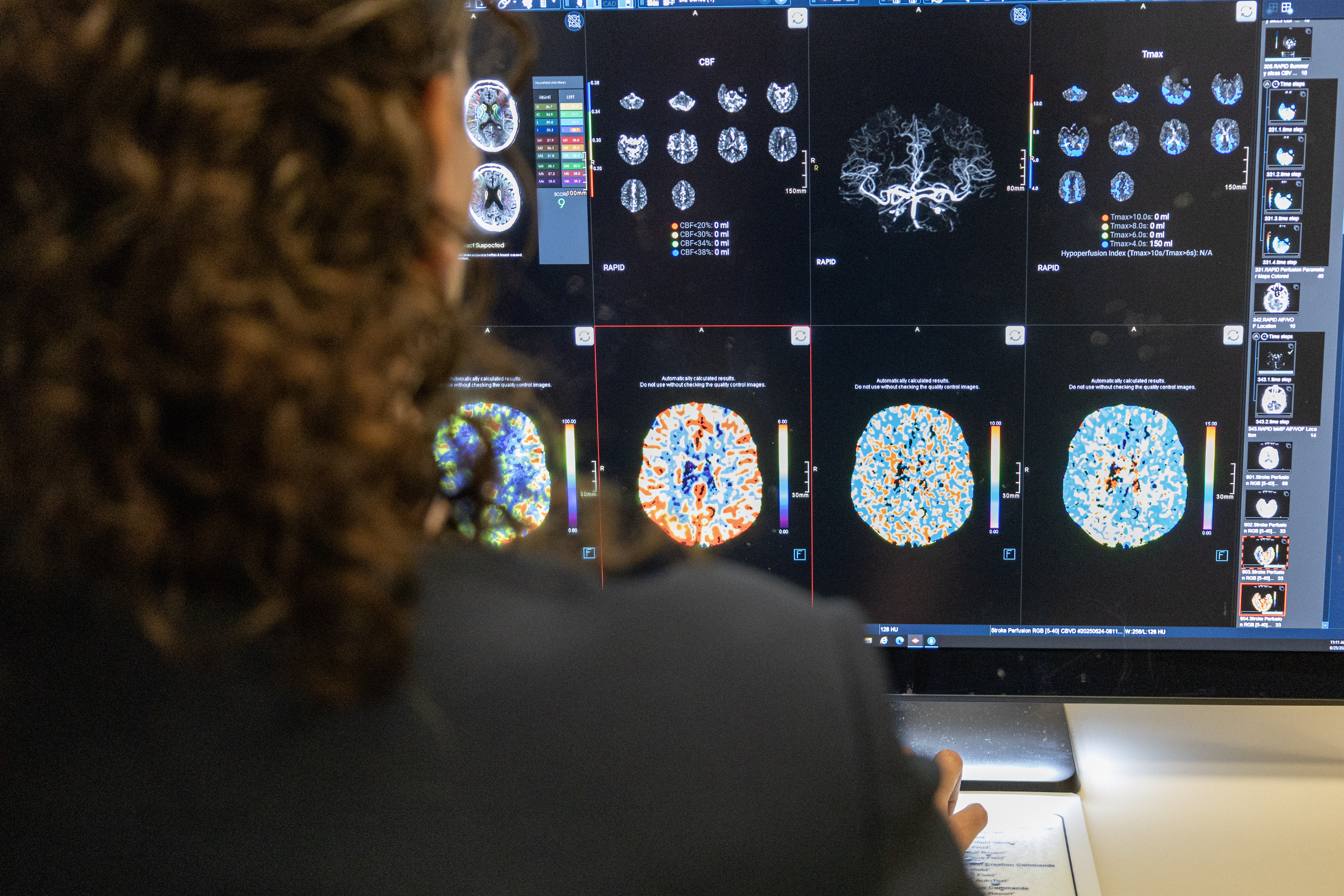
Photo caption: Dr. Speer, Chief of Radiology at Chatham-Kent Health Alliance, viewing RapidAI software.
A powerful new technology is transforming stroke care at Chatham-Kent Health Alliance (CKHA), enabling faster diagnoses and treatment for patients who arrive at the hospital with stroke-like symptoms. The Radiology Department has implemented RAPID AI, advanced imaging software that analyzes brain scans in real time. By quickly identifying signs of stroke and assessing the severity of brain damage, the tool helps physicians make faster, more accurate decisions which can be critical in improving outcomes and reducing long-term complications.
One of the key tools RAPID AI provides is an automated ASPECTS score. This score helps physicians understand how much of the brain may have been affected by a stroke. The ASPECTS score helps guide treatment decisions and can determine if a patient is a good candidate for certain life-saving procedures, such as removing a blood clot from the brain.
“Time is absolutely critical when treating stroke," said Dr. Stacey Speer, Chief of Radiology at CKHA. “RAPID AI gives our team fast, reliable information. It highlights areas of the brain that are in trouble and shows whether blood flow is being blocked. That allows us to make quicker, more confident decisions about how to treat our patients."
With the addition of this technology, CKHA has updated its procedures for all Code Stroke patients — meaning patients who come to the Emergency Department showing signs of a stroke.
“This is exactly the kind of impact our donors hope to make. We're thrilled to fund the implementation of this AI technology." said Christine Mitchell, President and CEO of the CKHA Foundation.
"It's improving patient care in a very real, immediate way — and helping our hospital stay at the forefront of stroke care."
Photo caption: Dr. Speer, Chief of Radiology at Chatham-Kent Health Alliance, viewing RapidAI software.