Photo caption: Providence Manor Recreationist Laura Callow Rushworth poses for a photo during an Indigenous drum-making recreation session
Once a month, residents at Providence Care’s long-term care home, Providence Manor, have the chance to explore Indigenous culture through traditional crafts, storytelling and ceremony. It’s all thanks to Recreationist Laura Callow Rushworth and Indigenous resident Leonard (Lenny) Brown, who work together to weave Indigenous traditions into engaging programs that spark conversation and creativity while bringing residents together.
“This is really important and meaningful work to share, especially as I’m growing with it,” explains Laura. “It’s also important to recognize that people are very interested in learning more. Maybe they have a connection or an understanding of the culture, or maybe they just want to learn and support their neighbours. Even staff are getting involved and asking questions.”
Laura’s ancestry is from the Squamish People, an Indigenous Nation in the lower mainland of British Columbia. In this month’s session, she is showing residents how to make a traditional drum and rattle using rawhide. It’s her first time creating them, but she has Lenny’s guidance and support. Laura and Lenny co-create programs, activities, and cultural events at Providence Manor.
“We clicked right away when we met,” explains Lenny. “We both have Indigenous roots and together we combine my Mohawk culture and language with her wonderful and beautiful music and smudging knowledge, and it just incorporates beautifully together.”
Lenny became a resident of Providence Manor in September 2024 and has a strong desire for his culture to be reflected and represented in his daily life. He joined the Residents’ Council and also became a member of the Quality Committee, giving him opportunities to share his knowledge, beliefs, and cultural ceremonies with other residents.
“It’s an honour to lead this work with Laura,” says Lenny. “Providence Care has supported my desire to see more Indigenous programming and events, and now we have our own native circle. It’s a beginning, and I look forward to seeing how this grows and continues to develop.”
Some standout events have included a Spring Equinox ceremony and a storytelling and music gathering on June 30 for Indigenous Peoples Day.
“Each month we ask people what they would like more of,” says Laura. “We’ve partnered with the Kingston Native Centre and Language Nest, and this fall we plan to draw on their community knowledge and expertise and bring that to share with residents.”
Lenny shares a traditional saying that captures the spirit of their work: “I was always taught that you can give a man a fish and feed him for the day, or you can teach a man to fish and you can feed him for life. That’s what we’re doing here. We’re thankful we have other communities that are supporting us and helping us, but we want to make sure that we are a community of our own; that we have supplies, drums, roots, to build our own Providence Manor native culture right here.”
While Lenny’s focus is on building community within Providence Manor, Laura is also making an impact across the organization. She is part of the Providence Care Inclusion Advisory Council’s planning group, playing a large role in the recognition of National Day for Truth and Reconciliation, also known as Orange Shirt Day, on Sept. 30. Throughout the month of September, the group is shared reading lists, hosted information booths and interactive Indigenous crafts. She also emceed a Truth and Reconciliation Gathering held at Providence Care Hospital.
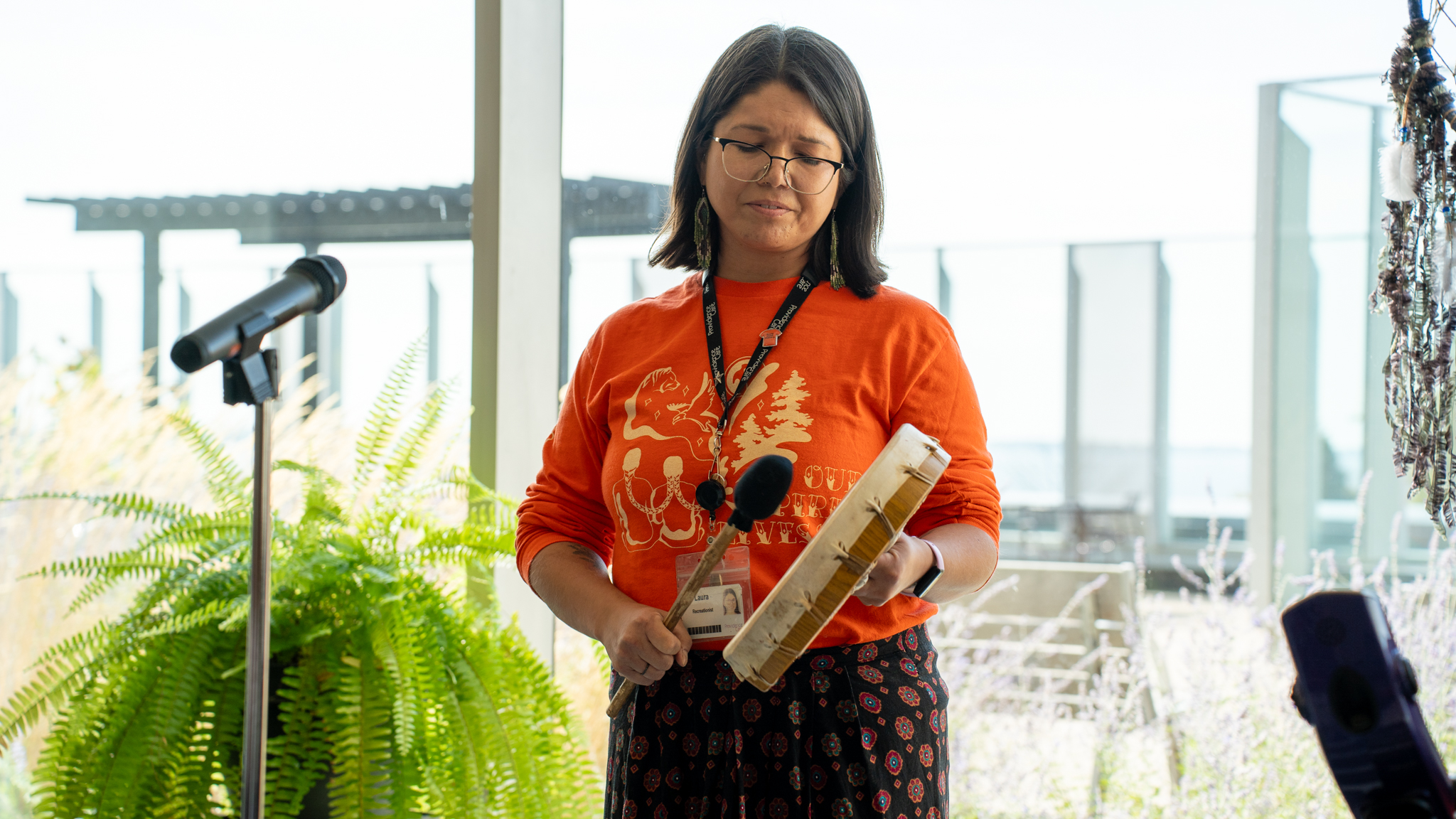 Photo caption: Providence Manor Recreationist Laura Callow Rushworth drums during Providence Care's Truth and Reconciliation gathering.
“It was an opportunity to grow understanding across the organization. It’s not just about a ribbon, pin or shirt. It’s about the willingness to learn, to listen, and to receive support along the way. If we give residents, staff and families the opportunity and a safe space to do that, we can get there.”
At Providence Manor, Laura and Lenny’s work is part of a broader commitment to inclusion, supported by the Inclusion Advisory Council, that aims to ensure every resident, patient, client, staff member, student and volunteer feels seen and understood. Their work serves as a reminder that reconciliation takes root in the everyday actions of learning, respect, and openness.