Photo caption: E. Dale Reckin (left), a tenant who receives care from the MINT Memory Clinic in their apartment building, and Bailey Hollister (right), Project Manager – Community Integration at Sunnybrook, who supports the clinic’s operations across four Toronto Seniors Housing buildings.
By: Danielle Pereira, Manager Corporate Communications, Sunnybrook Health Sciences Centre
In a Toronto seniors’ housing building, a health care team gathers in a common area while, upstairs, a clinician knocks on an apartment door.
The patient will not be coming to a clinic that day. The clinic has come to them.
The program, known as a Multidisciplinary Interprofessional Team (MINT) Memory Clinic, is well established in family health teams across Canada. But in Toronto, teams from Sunnybrook, Baycrest and SPRINT Senior Care have adapted the model to operate directly within Toronto Seniors Housing buildings, bringing dementia assessment and care into tenants’ homes.
The approach reflects a growing recognition that many older adults, particularly those with lower incomes and complex needs, face barriers accessing traditional care. Through an investment by the Slaight Family Foundation, the program currently supports about 40 tenants in four Toronto Seniors Housing buildings and is expected to expand to three additional sites this fall.
Addressing Barriers to Care
Across Toronto, demand for geriatric assessments continues to grow. For seniors living in subsidized housing, long wait times can be compounded by mobility challenges, limited income, difficulty navigating appointments and the cognitive changes that often accompany dementia.
“Sometimes even the most basic tests or follow-ups are really hard to access,” said Bailey Hollister, Project Manager, Community Integration at Sunnybrook. “When we don’t bring care into the building, people miss appointments. They don’t get the care they need.”
The embedded MINT clinic aims to reduce that fragmentation by bringing care closer to patients.
How the Model Works
On clinic days, members of the Neighbourhood Care Team, an integrated geriatric care model operating in Toronto Seniors Housing buildings, work together from a building’s common area. The interdisciplinary team includes family physicians, nurses, social workers, occupational therapists and pharmacists from Sunnybrook, Baycrest and SPRINT Senior Care.
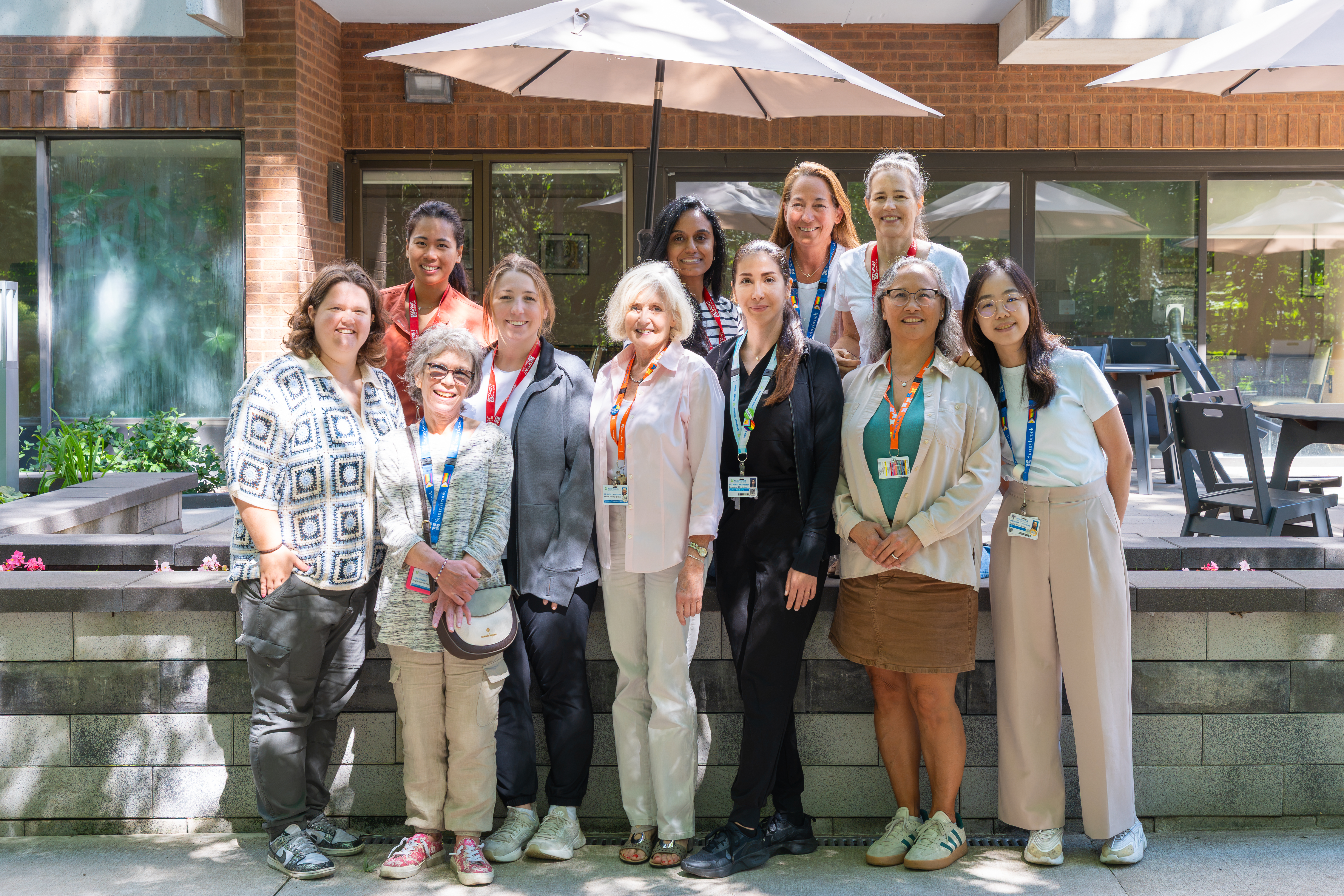
Photo caption: Members of the Neighbourhood Care Team.
Clinicians assess tenants in their apartments, conducting cognitive testing, reviewing medications and observing the home environment. At the same time, another team member gathers information from a care partner, such as a family member, friend or personal support worker.
The team then develops a care plan that may include diagnostic testing, social supports, recreation programming and referrals to community services. Additional services, such as imaging or lab work, are coordinated through the tenant’s family doctor.
“It’s a very full picture,” Hollister said. “We’re not just looking at cognition, we’re looking at what’s happening in their life.”
That broader view helps identify issues that might otherwise go unnoticed, including food insecurity, social isolation and unsafe living conditions.
Supporting Older Adults to Age in Place
For many tenants, the intervention happens before a crisis occurs.
Hollister recalls one tenant in her 80s who had become increasingly isolated after the death of her partner. Living alone, she had stopped eating regularly, was no longer seeking medical care and her apartment had become severely cluttered.
Through the program, the team was able to assess her needs and coordinate supports that included cleaning services, ongoing assistance and medical follow-up. Today, she remains in her apartment, which was her goal from the beginning.
“I've never met a tenant who wants to live anywhere else,” Hollister said. “They want to stay home.”
By providing care where people live, clinicians can build trust, identify risks firsthand and support independence while addressing safety concerns.
As Canada’s population ages, programs like the MINT Clinic offer a new way to deliver specialized care to underserved populations while helping reduce pressure on hospitals and specialist services.
“This is one way that could help address long wait times and growing demand, especially for underserved populations,” Hollister said.