Across Ontario, transitioning patients from hospitals to health and community settings remains a key challenge for hospitals. A symptom of larger capacity issues within the health care system, it is a critical area of focus for the Ontario Hospital Association (OHA) and its members.
Addressing these capacity issues involves developing and implementing solutions that enable patients to receive the care they need, while ensuring that health service providers, families, caregivers, and substitute decision-makers have the support they require to transition patients through the health care system and back to the community, where appropriate.
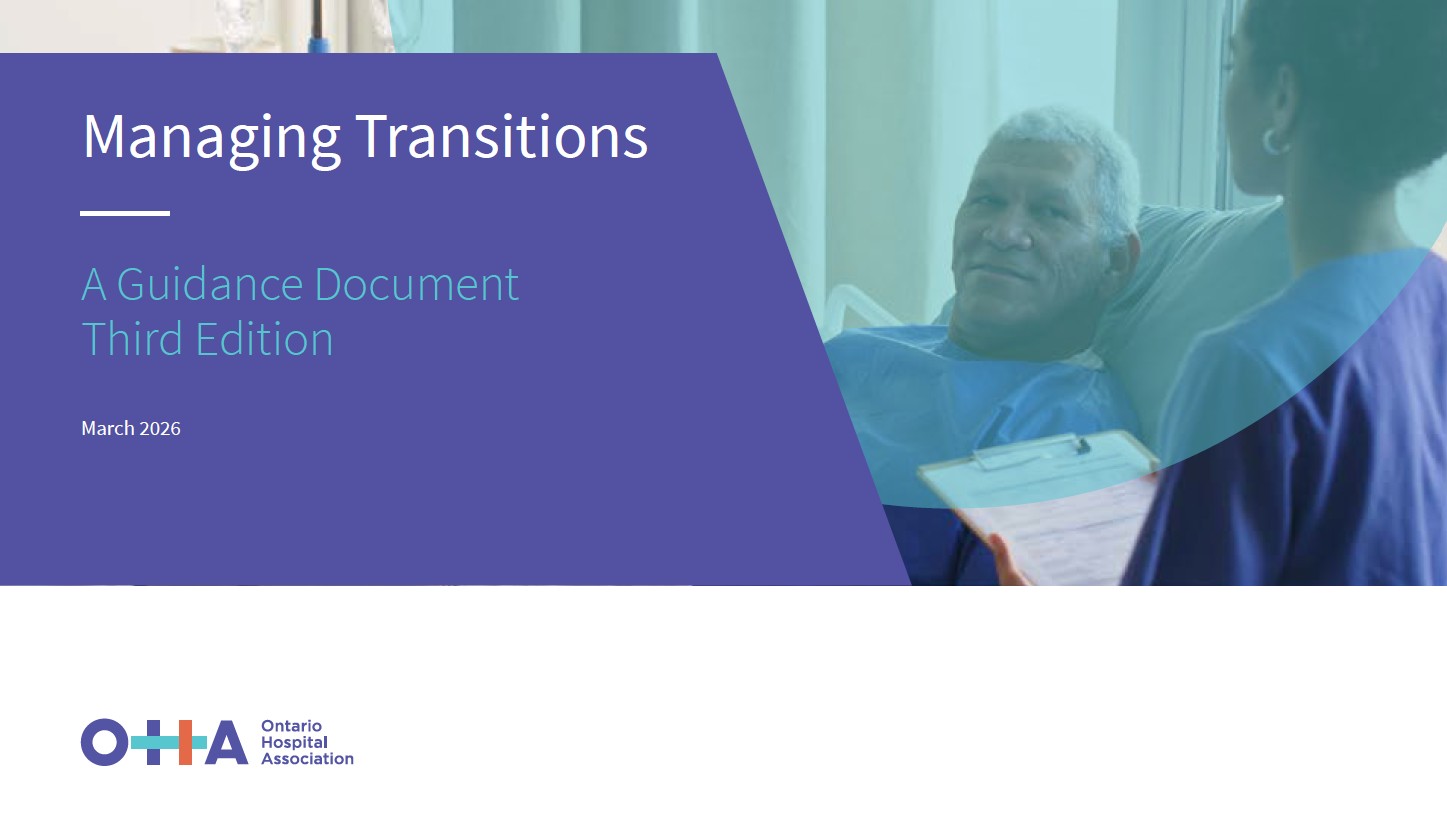 The OHA has developed the Managing Transitions guide for hospitals to support the standardization of policies and programs related to the transition and discharge of patients from hospitals once they no longer require the type of treatment and care offered at a particular facility.
Read Guide
The legislation governing the transition of patients across the health care system in Ontario has transformed significantly over the years, including amendments related to alternate level of care (ALC) patients, long-term care admissions, uninsured services, and the creation of Ontario Health and Ontario Health atHome.
The latest edition of the guide aims to promote a standard approach to care transitions and a consistent understanding of the information necessary to support and manage this process across evolving care models and settings. The guide assists users in complying with legislative and regulatory requirements, while highlighting the important role of health care providers, patients, families, caregivers, and substitute decision-makers in facilitating patient flow across the continuum of care.
Developed in consultation with Borden Ladner Gervais LLP (BLG) along with hospitals, Ontario Health, and Ontario Health atHome the Guide focuses on:
- The legislative framework for discharge planning, including consent, capacity, privacy, and admission to long-term care
- The different roles and responsibilities of those involved, including hospitals, Ontario Health atHome, patients, families, caregivers, and substitute decision-makers
- Information to effectively manage transitions in care, including co-payments, daily rate charges for uninsured services, and strategies for managing complex or contested discharges
Additional resources
Below are step-by-step flowcharts that can be referenced when managing transitions and navigating interactions as part of the discharge planning process. Flowcharts are offered in static and interactive formats:
Static
Interactive